Collection: Oval Shape Diamonds

Buy Certified Natural Oval Cut Diamonds — Sydney & Australia-Wide

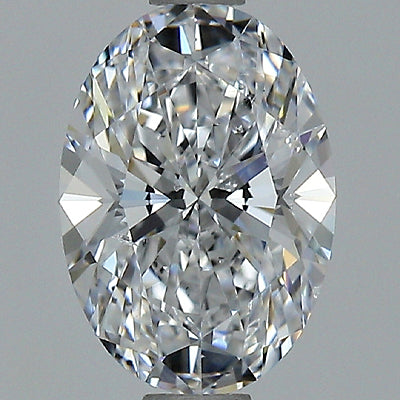
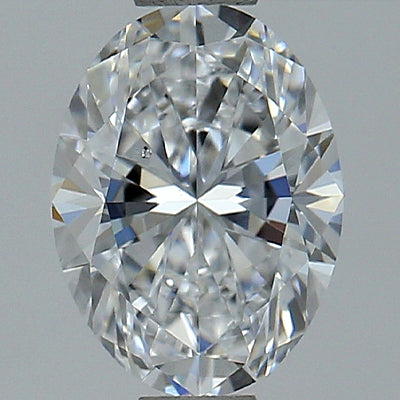
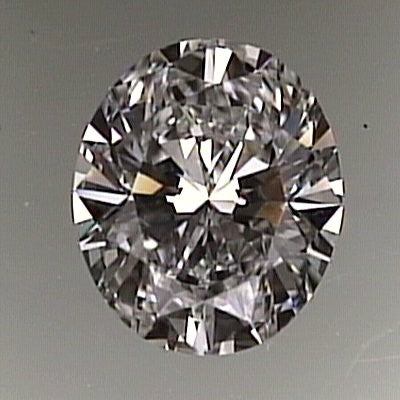
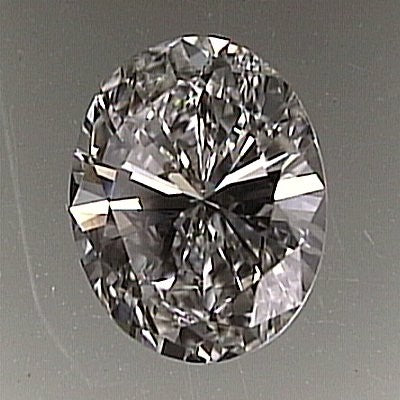
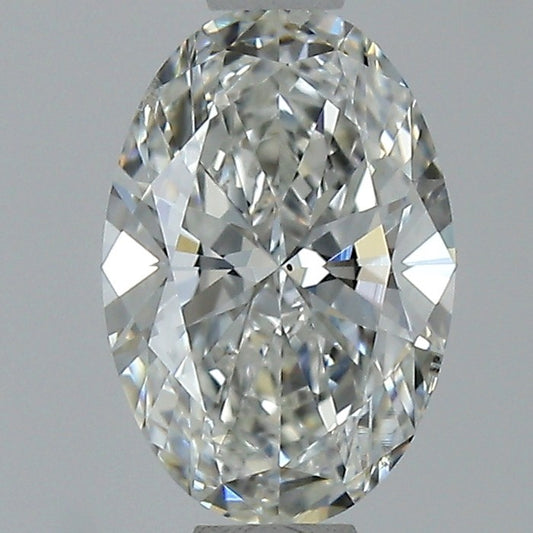
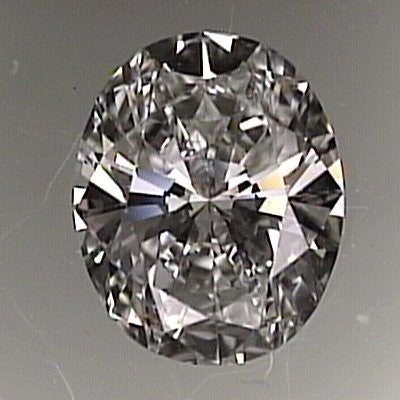
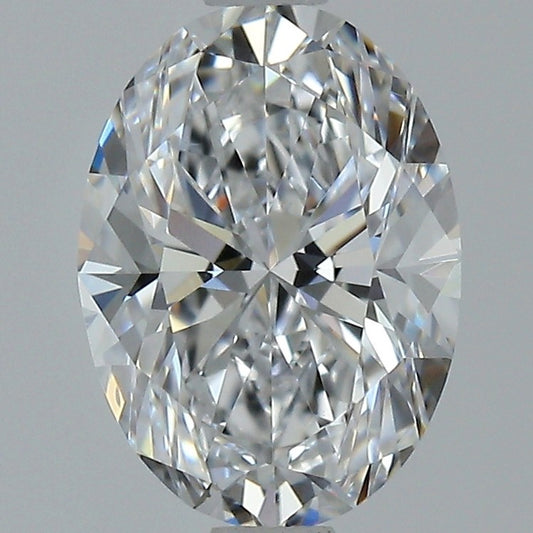
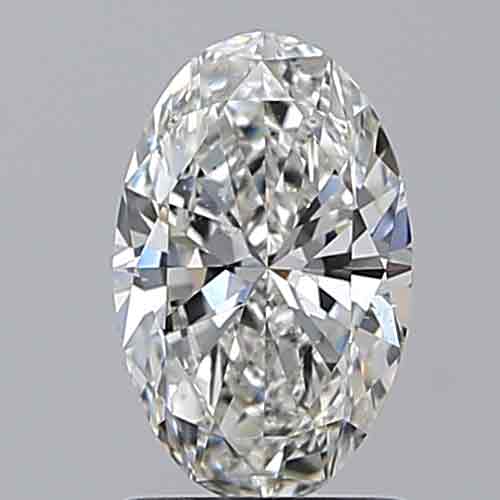
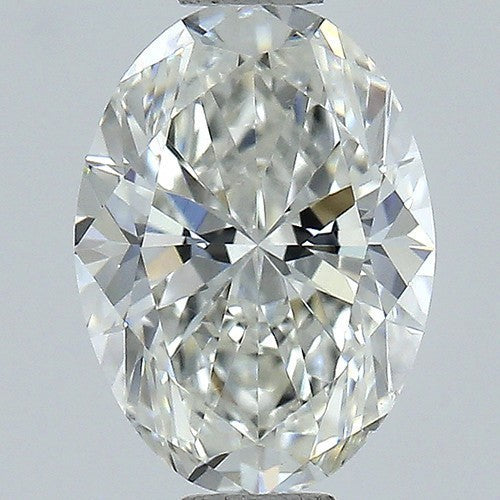
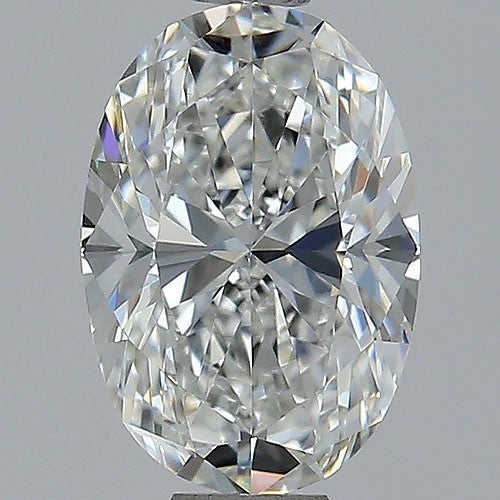
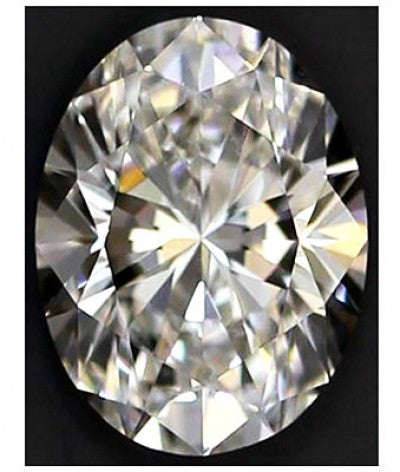
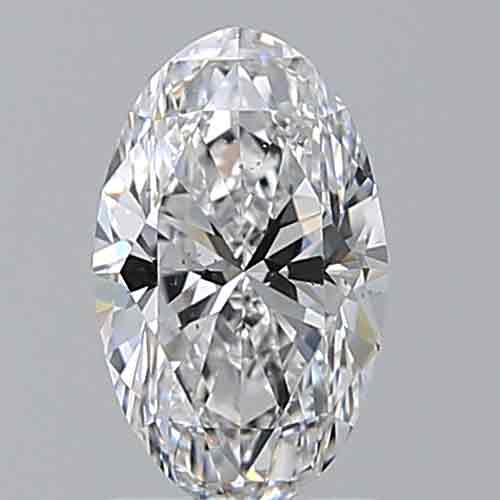
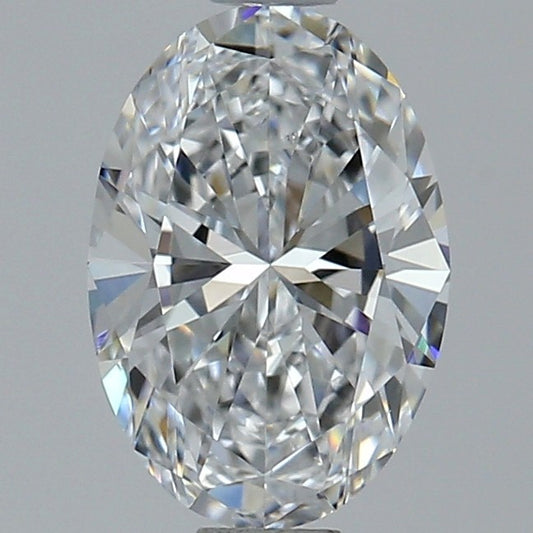
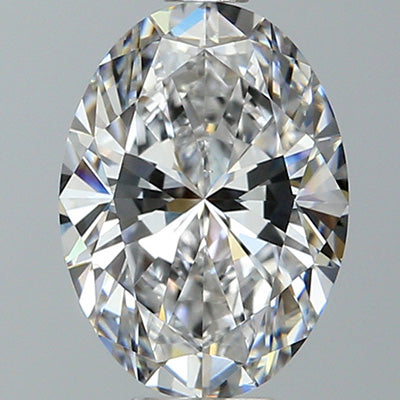
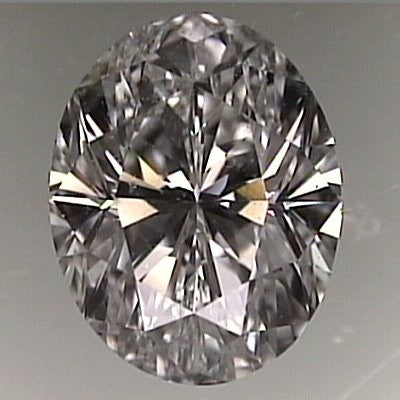
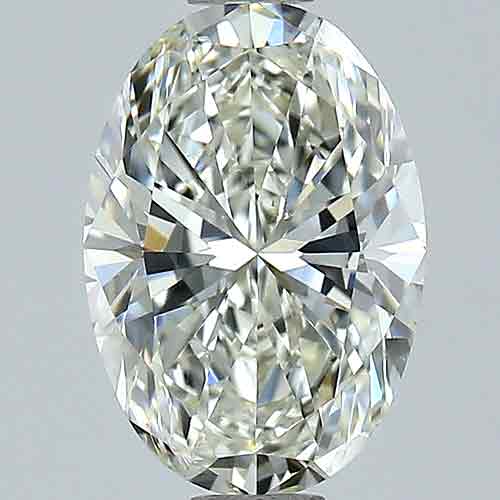
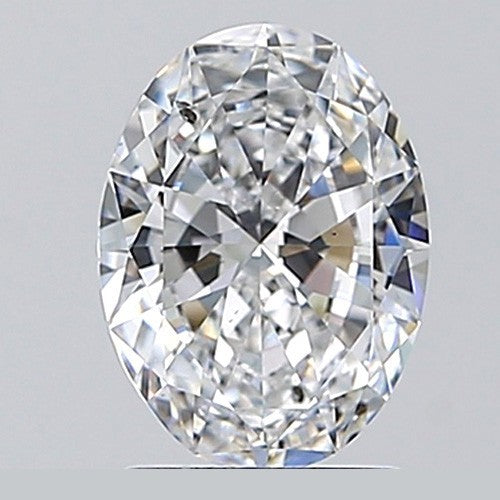
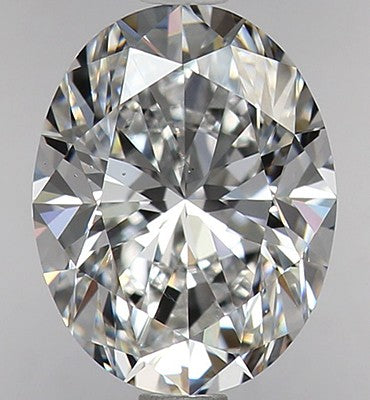
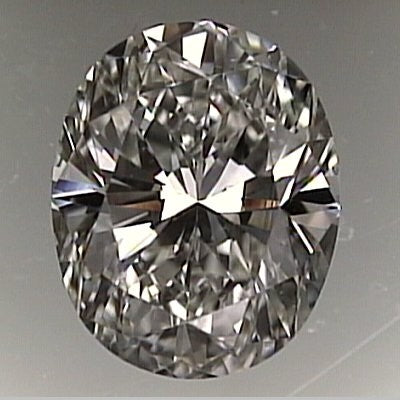
The oval is one of the most fashionable diamond shapes and has become the leading choice for modern engagement rings. Brilliant-style faceting delivers exceptional sparkle while the elongated outline makes an oval appear visibly larger than a round brilliant of the same carat weight and beautifully lengthens the finger. Every oval at Diamond Imports is 100% natural and independently certified (most by GIA, others by DCLA or HRD), hand-selected for cut quality and to avoid the dreaded bowtie effect. Over 45 years of expertise, based in Sydney CBD and delivered fully insured Australia-wide.

Frequently Asked Questions

What is an oval cut diamond?

An oval is a modified brilliant — an elongated stone with 56 to 58 facets arranged in the same light-returning pattern as a round. It reads as a softer, more elegant version of the round brilliant, and because the outline is elongated it flatters the finger and looks larger than its weight suggests.

Does an oval look bigger than a round of the same carat?

Yes, noticeably. An oval spreads its weight across a longer outline, so a one carat oval presents a larger face-up surface than a one carat round — usually around 10% more. Combined with the lower per-carat price, that is why ovals give you more visible diamond for your money than almost any other shape.

What grades do oval diamonds get?

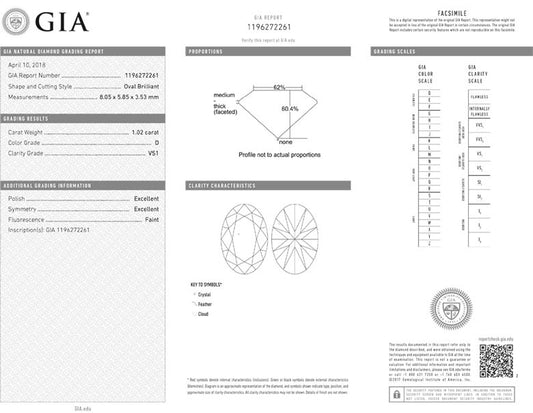
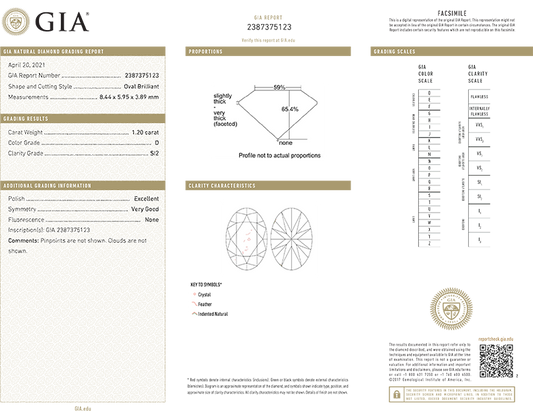
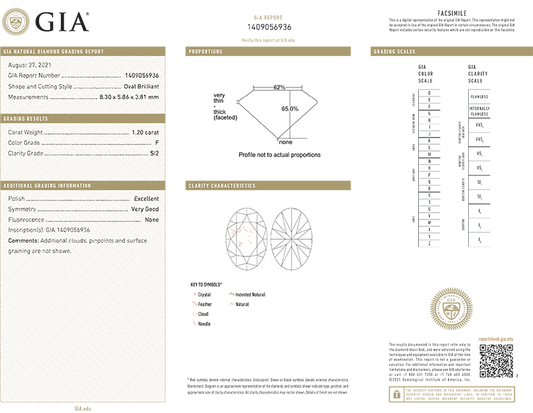
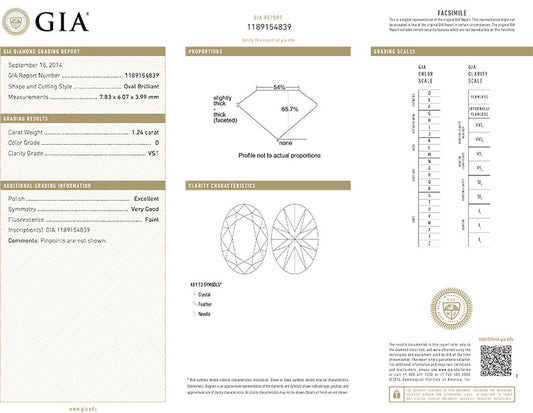
An oval receives the full 4Cs — carat, colour and clarity are graded exactly as they are on a round — plus polish and symmetry, each on the same five-tier scale from Excellent to Poor.

Polish is the quality of the surface finish on each facet. Cutting and polishing can leave faint marks — polish lines, tiny pits, burn marks from the wheel. Excellent or Very Good means the facets are clean enough that nothing interferes with light passing through. Below that, a dulled surface can take the crispness off the sparkle.

Symmetry is how precisely the facets are shaped, sized and aligned to one another, and how true the outline is. Excellent means the two halves mirror each other closely and the facets meet where they should.

What an oval does not get is an overall cut grade — GIA reserves that for round brilliants, whose facet arrangement is standardised enough to model. Fancy shapes vary too widely in faceting for one standard to apply.

So on an oval, polish and symmetry are the craftsmanship measures you have, and they are worth reading. What they cannot tell you is how the finished stone looks face-up — that judgement is still made with your eyes.

Why is symmetry important in a fancy shape diamond?

Because there is no cut grade to fall back on. GIA assigns a formal cut grade only to round brilliants, so on a fancy shape the certificate tells you polish and symmetry and little else about how the stone actually performs. Symmetry becomes the closest thing you have to a proxy.

But there are two kinds, and the certificate only covers one. The graded symmetry measures facet alignment under magnification. What you actually see is outline symmetry — whether the two halves mirror each other. A pear with shoulders of different heights, an oval with one end fuller than the other, a marquise with points that do not line up: none of that necessarily drops the grade, and all of it is obvious once the stone is on your finger.

Asymmetry also affects light. Facets that do not align properly send light out the side instead of back to your eye, which is what causes dead patches and heavy bowties.

So on a fancy shape, look for Very Good or better on the certificate — then look at the stone. The outline either reads as balanced or it does not, and that judgement is one you can make yourself in a few seconds.

What is a bowtie, and should it worry me?

A bowtie is a dark band across the centre of an elongated stone, caused by facets shadowing the eye rather than returning light. Almost every oval has one to some degree. A faint bowtie that shifts as the stone moves is normal and adds character; a heavy static one deadens the middle of the diamond. It does not appear on any certificate — the only way to judge it is to look at the stone, which is why we check every oval face-up before we recommend it.

What length-to-width ratio should I choose for an oval?

Most ovals fall between 1.30 and 1.50, and 1.35 to 1.45 is where the majority of buyers land — long enough to read as elegant, not so long that it looks stretched. Below 1.30 it starts to look almost round; above 1.50 it becomes quite dramatic. This one is purely taste, so it is worth seeing two or three side by side.

Does an oval diamond make your finger look longer?

Set north-south, in line with the finger, yes — an elongated stone draws the eye lengthways and slims the hand. That is a large part of why ovals, pears and marquises are chosen.

The counter-trend is to set them east-west, turned across the finger. It reads as more contemporary and quietly confident, gives a wider, more architectural look, and the stone covers most of the band so you see very little metal. It suits a plain band and someone who wants the diamond to be the whole design.

The two look completely different on the hand and neither is a compromise. Worth trying both before deciding — we set either way, and it costs no more.

What ring styles suit an oval diamond?

Solitaire shows the outline off best — the elongated shape is the whole appeal, and a plain band lets it read cleanly. Four claws is usual.

Halo works beautifully on an oval, the surround echoing the curve and adding real size.

Three stone with pear or trilliant side stones flows with the oval's shape rather than interrupting it, and it is one of the most elegant combinations there is.

Side stones along the shoulders, or pavé running into the setting, lift the whole ring without drawing attention from the centre stone.

East-west is the one worth trying even if you think you will not like it. Turned across the finger, an oval becomes something quite different — wider, more contemporary, with the stone covering most of the band.

All made to order in our own workshop, built around your stone.

What is a toi et moi ring?

French for "you and me" — two stones set side by side on one band, usually curving away from each other. The design is centuries old and has been through several revivals; Napoleon proposed to Joséphine with one. It has had a significant resurgence in the last few years, and elongated fancy shapes are the most requested stones for it.

Pears and ovals suit it particularly well, because their elongated outlines give the pair a natural flow — two stones set point-to-point, or nose-to-tail so they curl around one another. The result reads as one piece of jewellery rather than two stones on a band.

You do not have to match them. Some of the most striking versions we make pair two different fancy shapes — a pear with an oval, a marquise with an emerald cut — so the two halves contrast rather than mirror. Others pair a diamond with a coloured gemstone: a sapphire, an emerald or a ruby alongside it. That combination has real impact, and it lets the ring carry meaning a matched pair does not — two birthstones, or two things that mean something to the two people.

It is also a design that has to be made rather than bought off a shelf. The two stones need to be chosen together, matched for depth so they sit level, and the setting built around that specific pair. That is the kind of piece we make in our own workshop.

What colour grade suits an oval diamond?

Elongated shapes concentrate colour at the tips, so an oval shows tint slightly more readily than a round of the same grade. G or better stays reliably white in white gold or platinum; H is often fine but worth checking. In yellow or rose gold you can go lower again, because the metal warms the stone regardless.

Will inclusions show in an oval diamond?

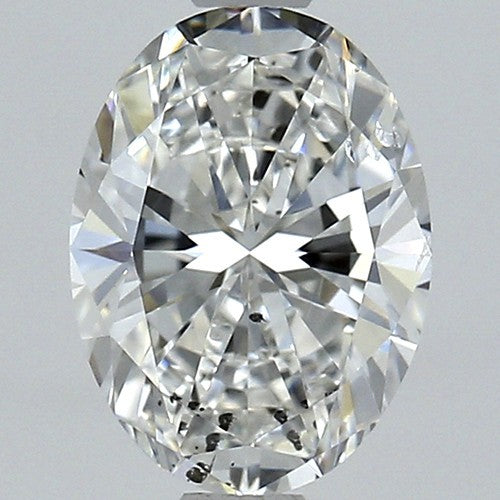
The brilliant faceting hides inclusions reasonably well, so plenty of SI1 ovals are eye-clean. The place to look is the two ends — inclusions near the points are more visible than the same inclusion under the middle of the stone. We check every stone face-up before recommending it.

How big is a one carat oval diamond in millimetres?

A well-proportioned one carat oval measures roughly 7.7 x 5.7mm, against about 6.4mm across for a round of the same weight. That extra length is what makes it look bigger on the hand.

Why can I see an inclusion in your photos?

Because our images and videos are taken at high magnification — far closer than any human eye gets to a diamond, and far closer than the standard the stone was graded to.

Clarity grading is done under 10x magnification. That is the international standard: a grader with a 10x loupe decides whether an inclusion is there and how it affects the grade. Online photography routinely runs at twenty, thirty times life size or more, so you are seeing the stone at several times the magnification GIA used to grade it. An inclusion that fills your screen may be something the grader needed a loupe to find at all.

Colour matters too. A white or transparent inclusion — a feather, a cloud, a crystal without body colour — is far harder to see than a dark carbon spot of the same size, because there is little contrast against the diamond around it. Two stones can carry the same grade and look entirely different in the hand for that reason alone.

We photograph at high magnification deliberately. We would rather show you everything than shoot a diamond flatteringly and have you surprised later. But an inclusion that looks obvious on screen is very often invisible in the hand, at arm's length, on a moving finger, in ordinary light.

The grade tells you what is there. The magnification tells you where. Neither tells you whether you would ever notice it — that is a judgement we make face-up, under proper light, on every stone we hold.

Does shop lighting change how a diamond looks?

Considerably, and it is worth knowing before you compare stones in different places.

Jewellery displays are lit to sell. Rows of halogen or bright LED spots directly above the case flood the stone with intense, concentrated light from every angle. That produces maximum sparkle and, at the same time, washes out inclusions — the scintillation is so busy that small imperfections simply disappear into it. A diamond in a well-lit display case is showing you close to the best it will ever look.

Daylight is the opposite. Soft, diffuse, coming from one direction. Sparkle is quieter, and anything inside the stone has nowhere to hide. Diamond grading uses controlled, colour-balanced daylight-equivalent lighting for exactly that reason — it is neutral, and it is reproducible.

Neither light is dishonest. But if you look at a stone under spotlights and then take it outside, you will see a different diamond, and most of a ring's life is spent in ordinary light.

When you view diamonds with us, you see them under professional diamond grading lights — the same neutral, colour-balanced lighting the laboratories use — and in natural daylight. No spotlit display case. If a stone looks right under those conditions, it will look right anywhere.

Should I view more than one diamond at a time?

Always, and we would insist on it.

A single diamond on its own looks excellent. There is nothing to measure it against, so your eye accepts it. Put a second stone beside it and differences appear immediately that you would never have seen alone — one reads slightly warmer, one has more life, one throws broader flashes while the other glitters more finely.

This is how the trade buys, and it is the only reliable way to judge colour in particular. Colour grading is comparative by definition: graders work against a set of masterstones, not from memory. Your eye works the same way. Two stones a grade apart are obvious side by side and almost impossible to separate one at a time.

So we will put several in front of you. Sometimes that means you choose a lower grade than you came in for because you genuinely prefer how it looks, and sometimes it means you spend a little more because you can finally see the difference. Either way you will know why, which is the point.

Do you sell lab-grown diamonds?

No. Every diamond we sell is a natural diamond, and we've never dealt in lab-grown, simulants or treated stones.

A lab-grown stone is a manufactured product. It's grown in a reactor over a few weeks, then mass produced in unlimited quantities in any size or grade. That's the fundamental difference: a natural diamond took billions of years to form and exists in finite supply, while a laboratory-grown one is a commodity with no ceiling on production. It shows in the pricing — as capacity has scaled, lab-grown prices have fallen steeply and continue to fall, and there is no established secondary market for them.

What you're buying with a natural diamond is scarcity and origin. Rare, and natural. It's why we've never sold anything else. Read our full comparison of natural and lab-grown diamonds.

What certification do your diamonds come with?

Our diamonds are independently certified, most commonly by GIA, with others graded by DCLA or HRD. The certificate is issued by the laboratory, not by us, and it accompanies the stone when it ships.

Can I see a diamond before I buy?

Yes. We are in Sydney's CBD and we see clients by appointment, so you can view stones side by side and compare them in person before deciding.

Can't find the diamond you're looking for?

Just ask us. Finding a particular stone is a large part of what we do, and there's no obligation when you enquire. We'll do our best to source the finest quality natural diamond for you.

Our list is smaller than you'll see on some sites, and that's deliberate. Every diamond here is one we've looked at properly before listing it. Many diamond websites show tens or hundreds of thousands of stones drawn from shared trade lists — diamonds held elsewhere that the seller hasn't seen and won't see unless you order one. It looks like more choice, but nobody has assessed the individual stone, and two diamonds with the same details on paper can look quite different.

So if what you want isn't here, tell us what you're after and what you'd like to spend. We'll look for it, check anything we find ourselves, and only show you stones we'd be happy to recommend. If we can't find the right thing at your budget, we'll say so and talk through the options — sometimes a small change in colour, clarity or size makes all the difference.

Either way, you'll only ever be offered a diamond that we have complete confidence in recommending to you, and it will not just be based on the cheapest price.

Do you make the ring as well as supply the diamond?

Yes. Most clients select the diamond first and then the setting — either one of our existing designs or a fully custom piece made to your description or an image. Everything is handmade by our own jewellers.

I'm not in Sydney — can I still buy from you and have jewellery made?

Yes. We have many loyal customers all over Australia, and we're able to consult by phone and share photos and videos whenever possible.

Distance is not the obstacle people expect. We'll guide you through the options and select the finest quality diamonds and gemstones for you, so you can make an informed decision from wherever you are. The same applies to custom made engagement rings and jewellery — we'll talk you through it and keep you across it as it's made.

We deliver fully insured anywhere in Australia — every capital city, and regional and rural addresses just the same.

If you are able to come in, we'd always rather show you the stones in person — and if you're travelling to Sydney, appointments can be arranged on weekends.

How do I get the best oval diamond for my budget?

Tell us the number you have in mind and what matters most to you, and we will show you the best stones we hold at that level. We are a diamond merchant, not a retail jeweller — we do not charge retail prices, and we source natural certified diamonds to suit your budget rather than steering you toward whatever is in the display case. Diamond Imports is a foundation member of the Diamond Dealers Club of Australia, and you will deal directly with Daniel throughout.